PROBLEM
Paper notes are good for ideas because you can write any way you like. They are hard to organize and keep, though. Digital notes are easy to store and search, but you can express less with them.
So many people use both. Then notes end up scattered and hard to find. I wanted a way to write as freely as on paper and keep things as tidy as digital.
APPROACH
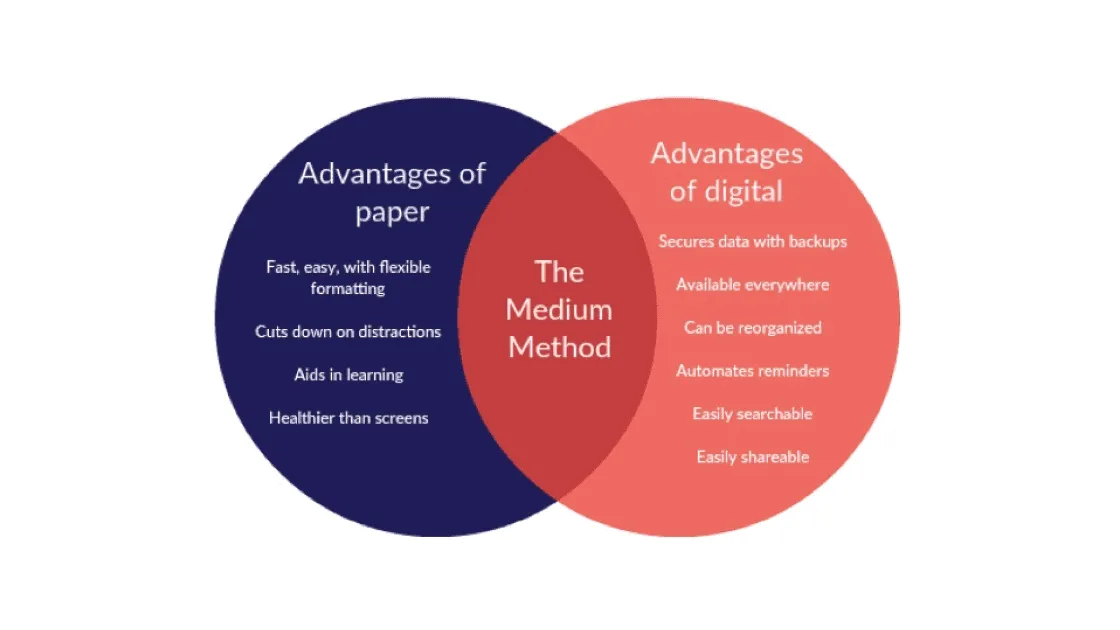
I designed a system that leaves the way people write paper notes alone and moves only storage and search to digital.
First I looked, through user interviews and research, at how people use paper and digital notes. Something had to carry notes written on paper into the digital world, and it could not change anyone’s note-taking habits.
That something became Meemo, whose main job is turning paper notes into digital ones right away. Writing happens on paper; finding and organizing happen digitally.
SOLUTION
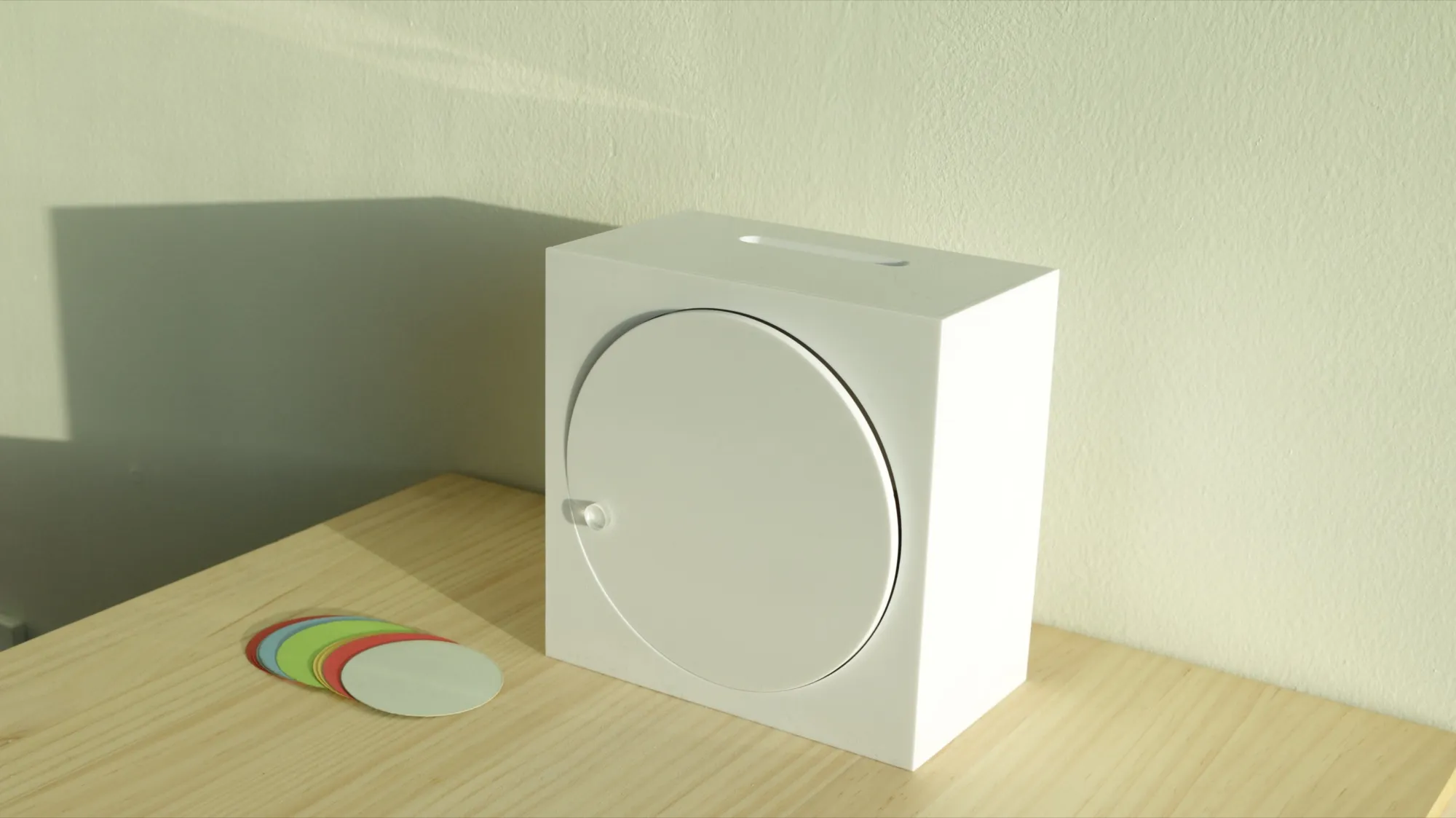
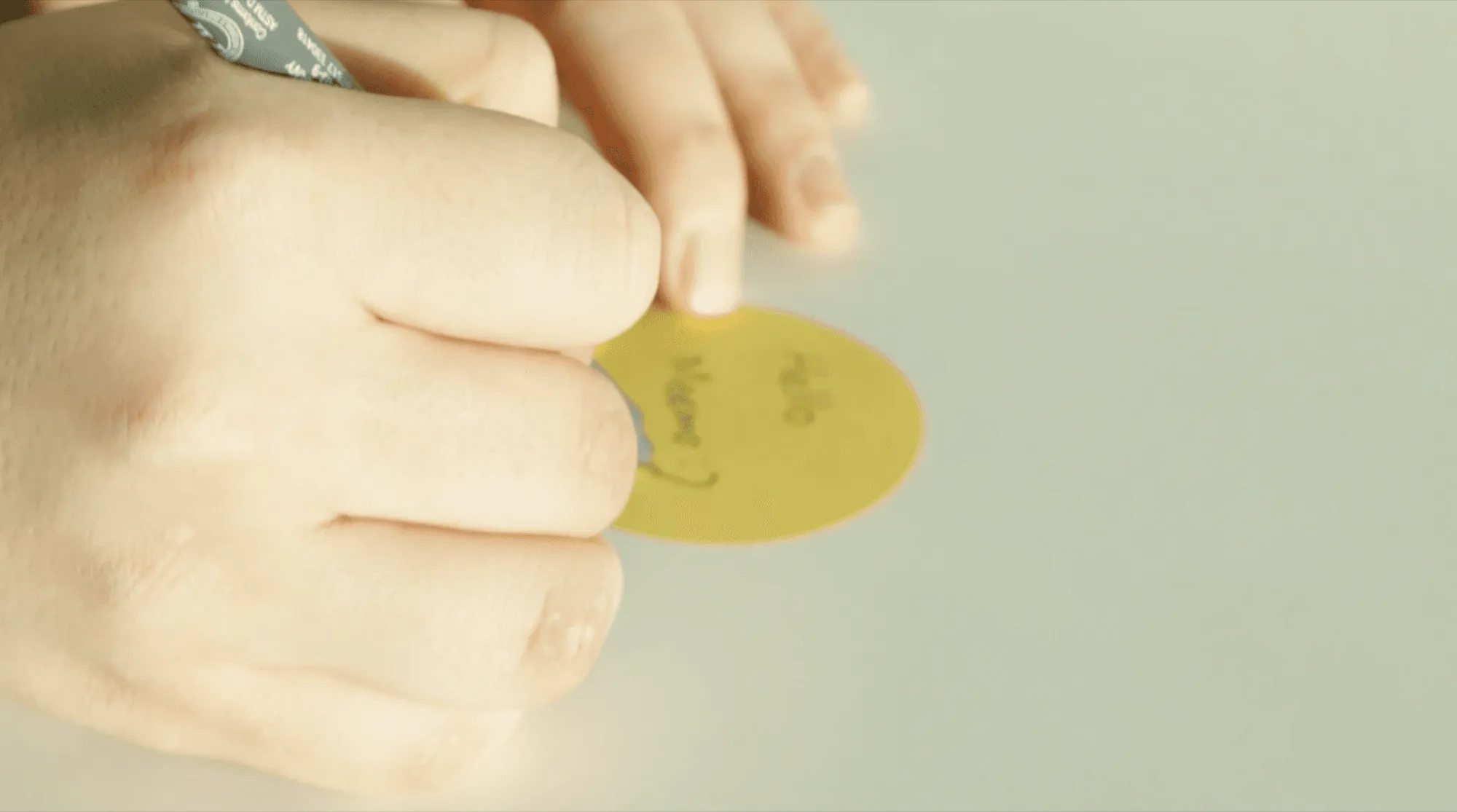
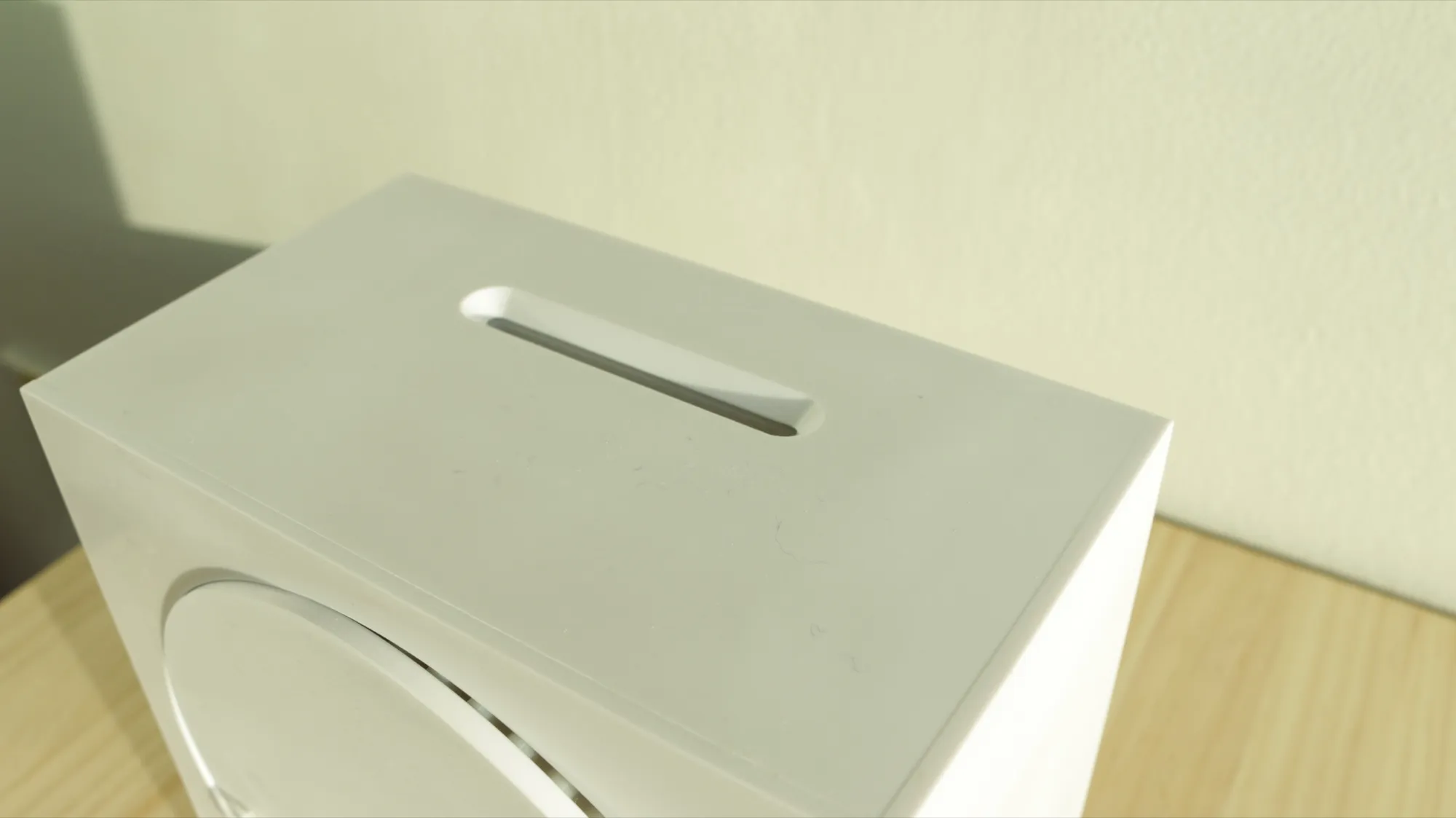
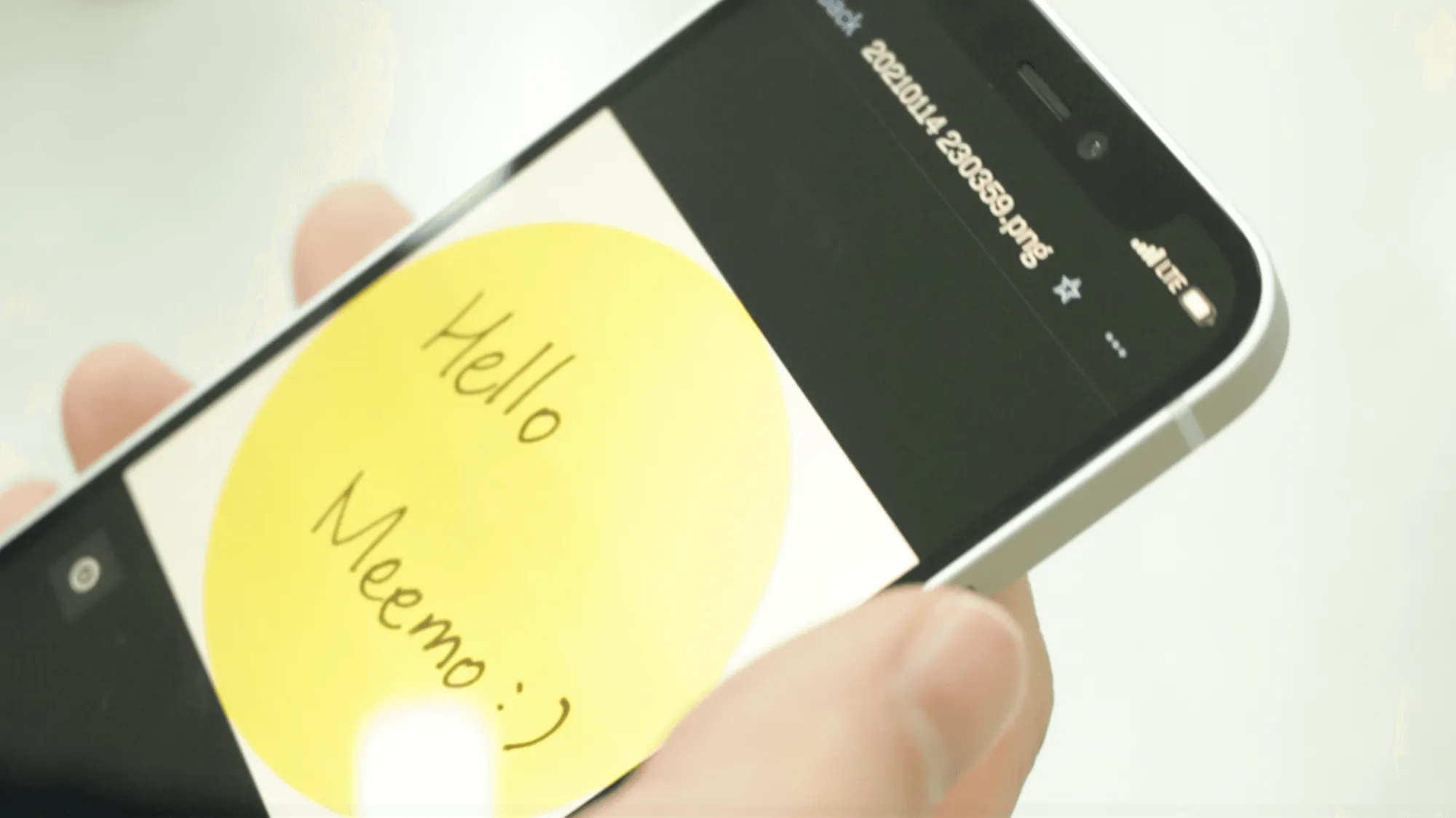
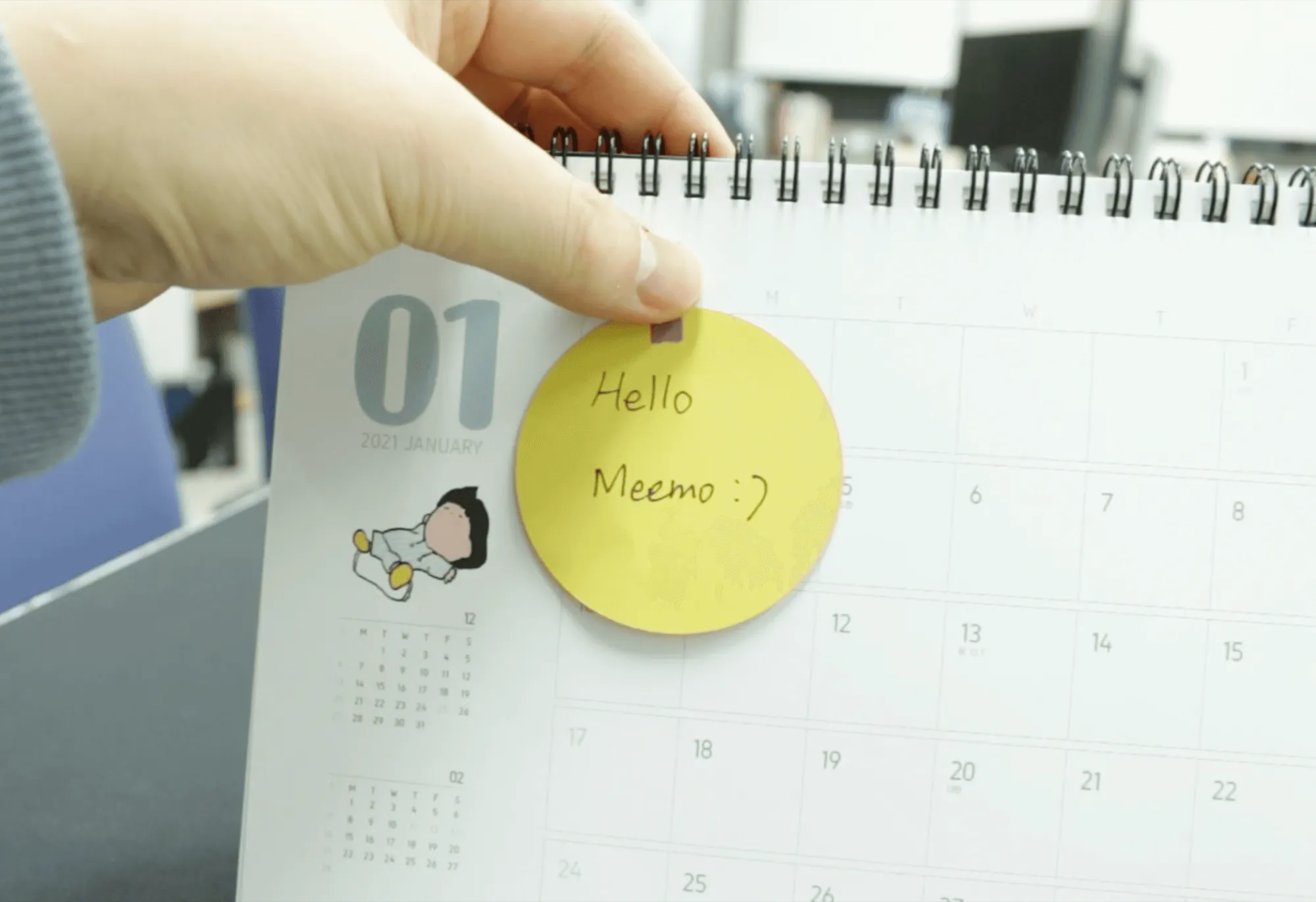
Put a paper note into the device and Meemo turns it into an image and uploads it to Dropbox right away. The writing still happens on paper, but the note can be searched digitally and opened on other devices.
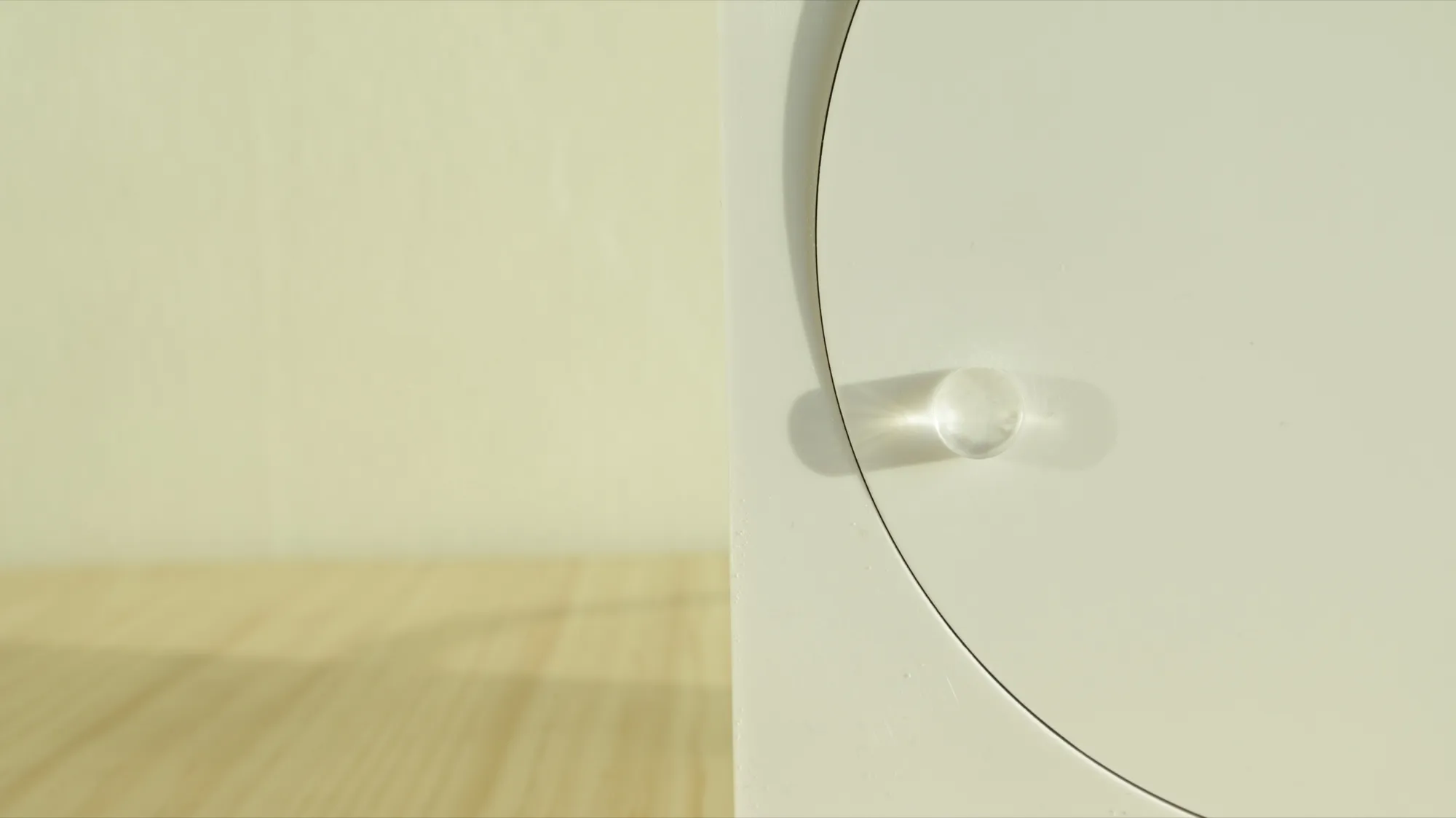
While it scans, the disc on the front turns slowly, and it stops when the scan is done. The turning disc tells you the scan is in progress, and it adds a little fun to taking notes.
When the scan is done, the note comes back out to be used again or filed away, so the paper workflow carries on as before.
IMPLEMENTATION
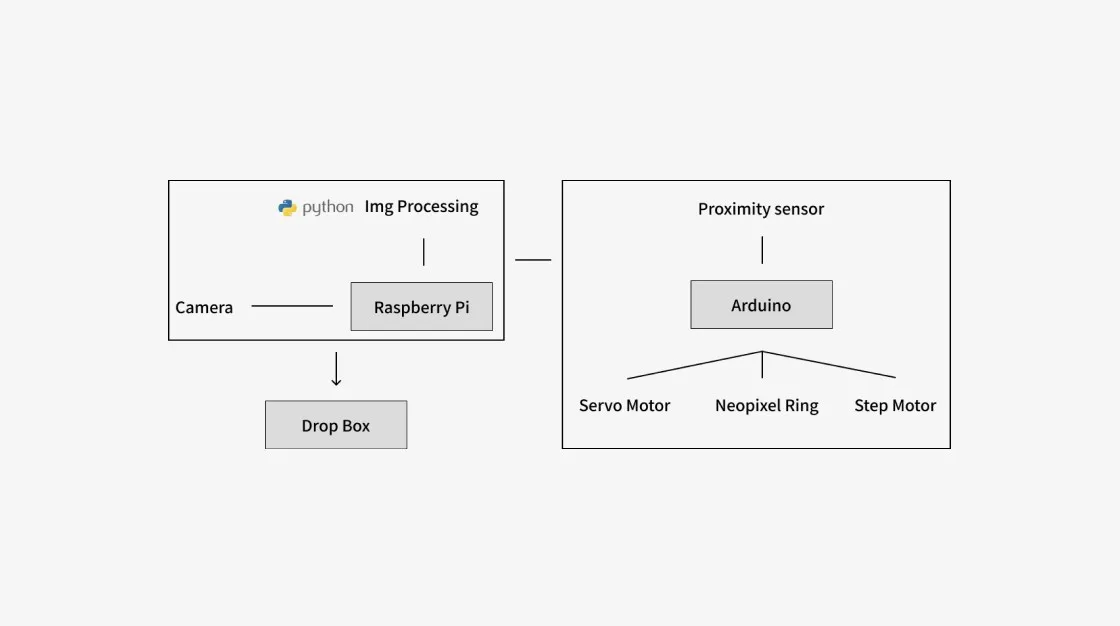
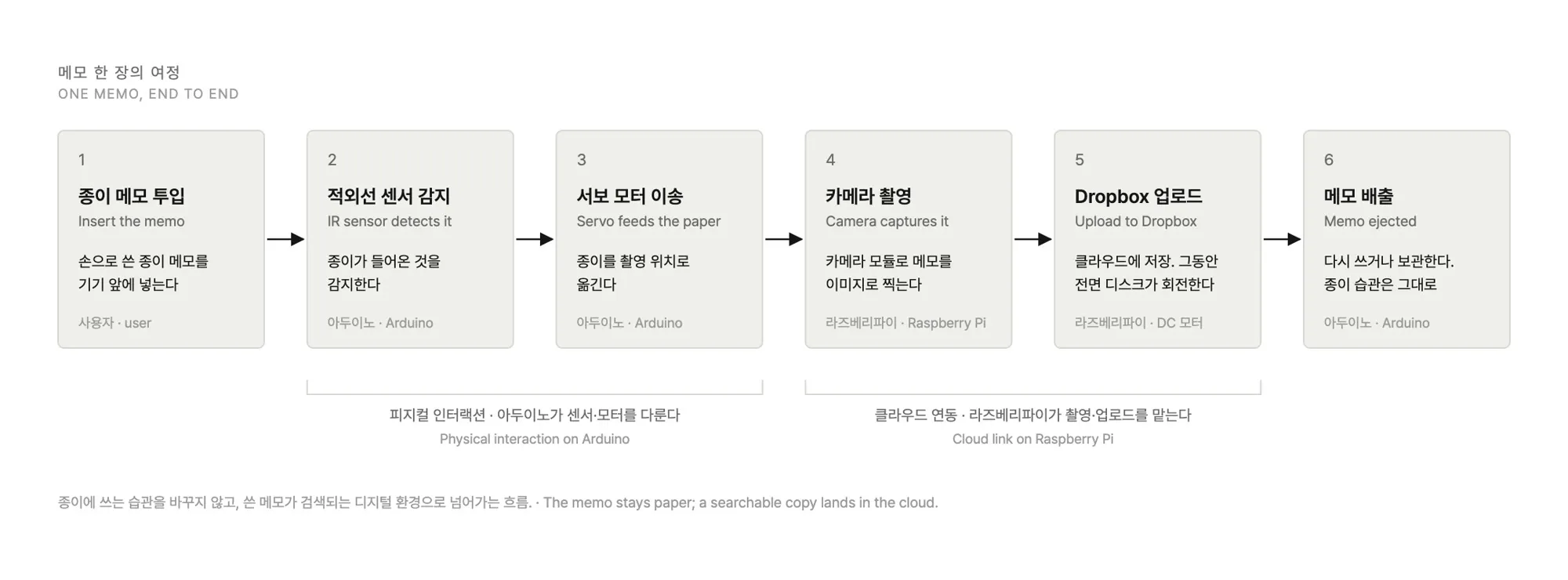
The hands-on part runs on Arduino. When you insert paper, an infrared sensor detects it and a servo motor moves it inside. A stepper motor turns the disc to show progress. For the capture, a 12-LED NeoPixel ring around the camera lights up white to brighten the dark interior.
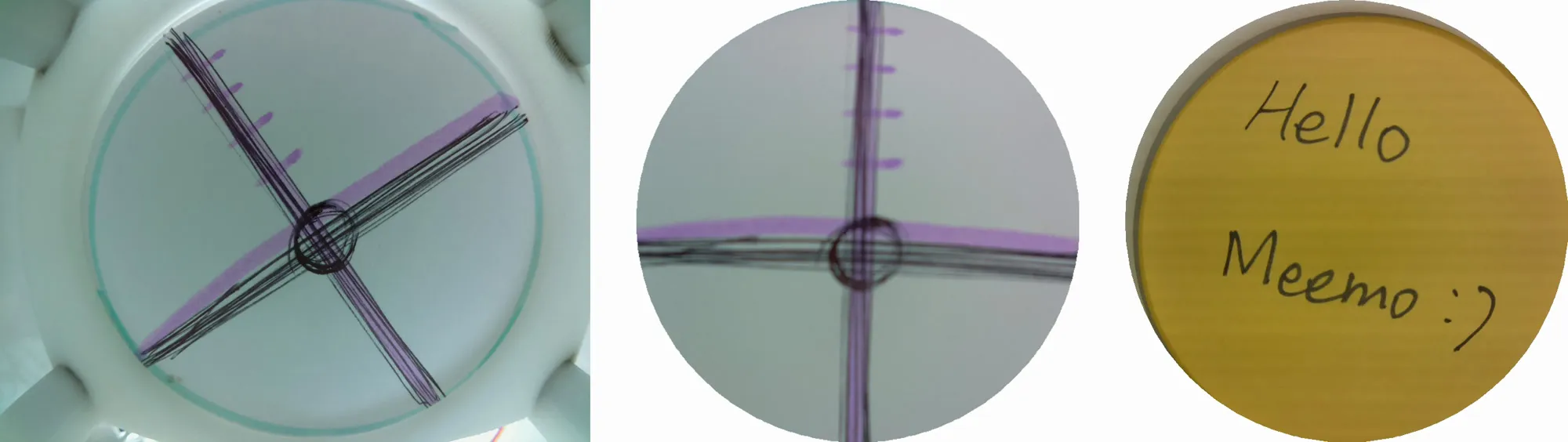
Cloud storage comes from linking a Raspberry Pi to the Arduino. When the Arduino reports a sheet, the Raspberry Pi takes a 1024×768 photo, crops the center to a square, and applies a round mask in the shape of the memo. The file is named with the capture time and uploaded to Dropbox.
PROTOTYPING
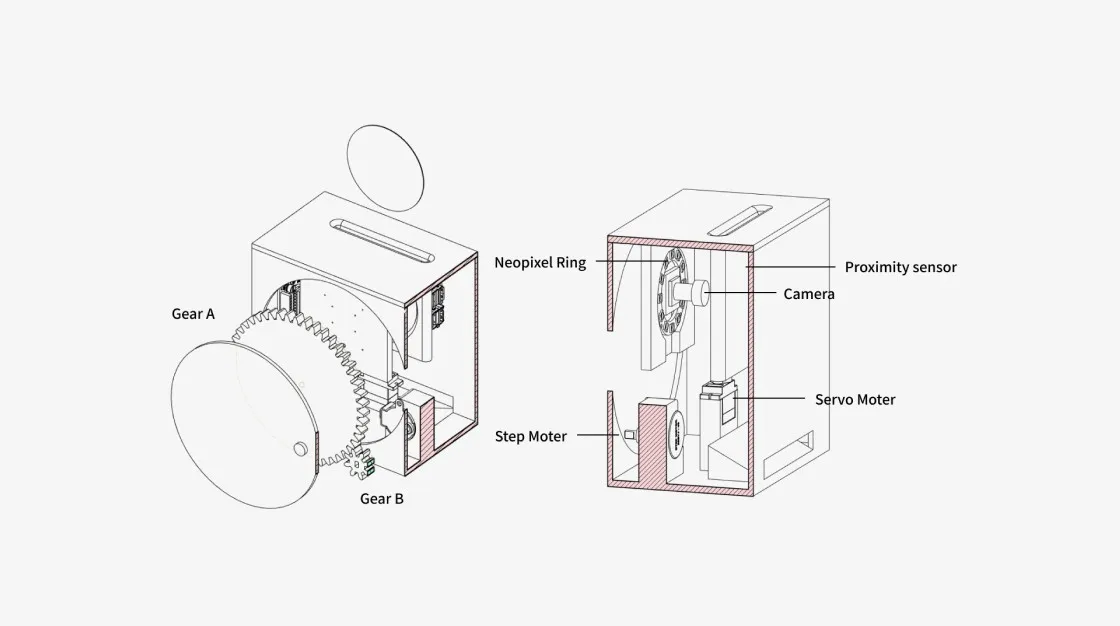
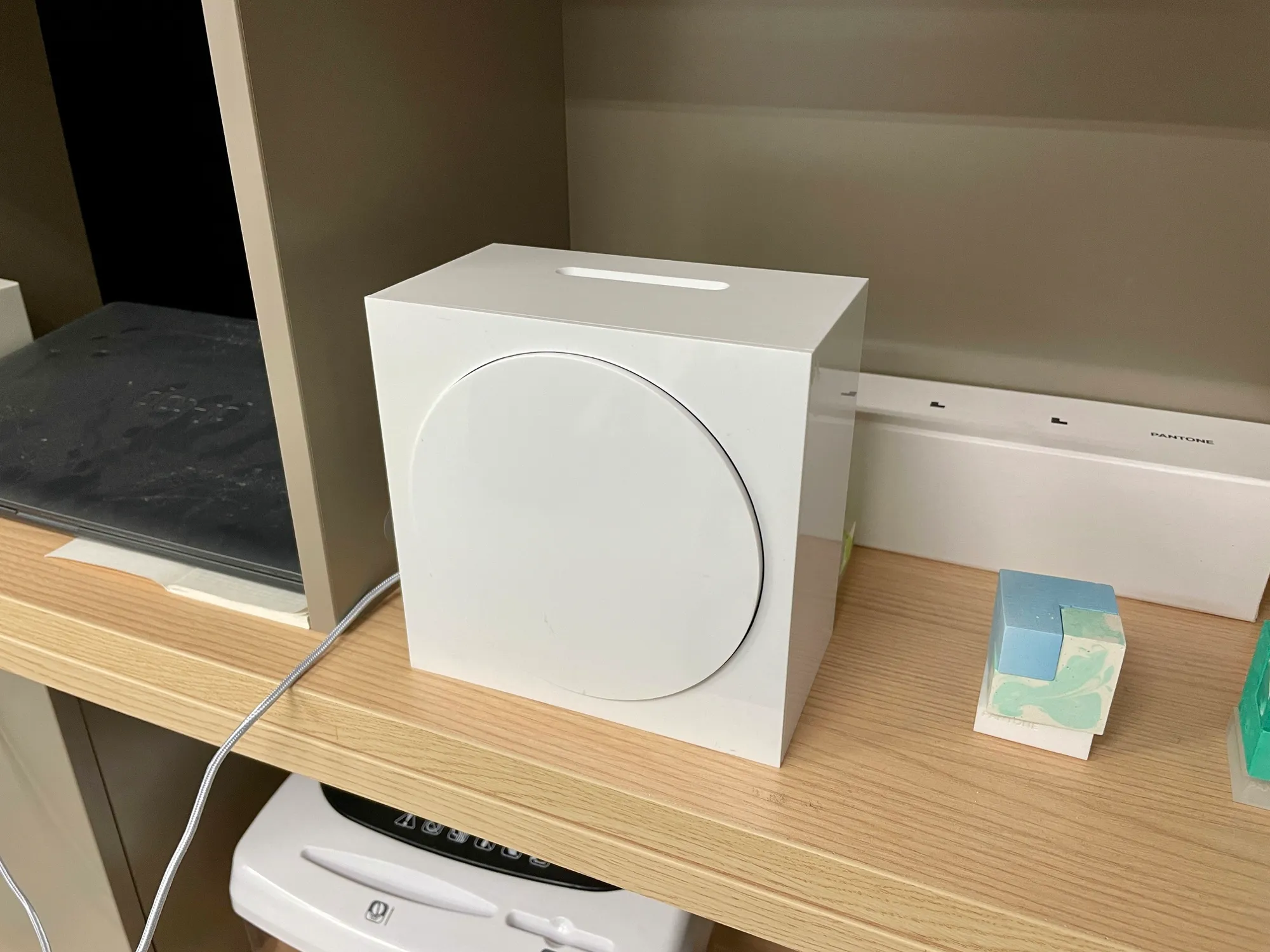
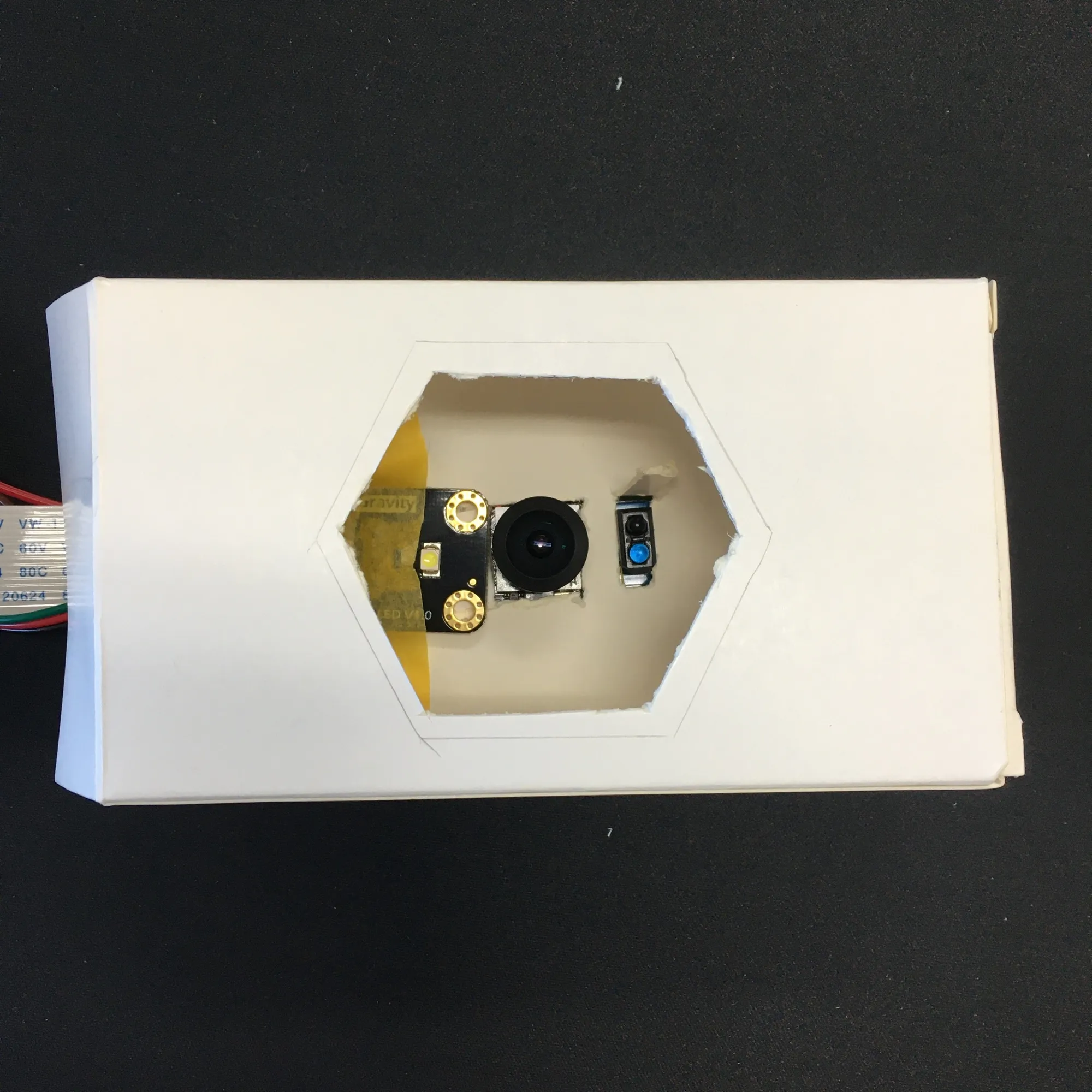
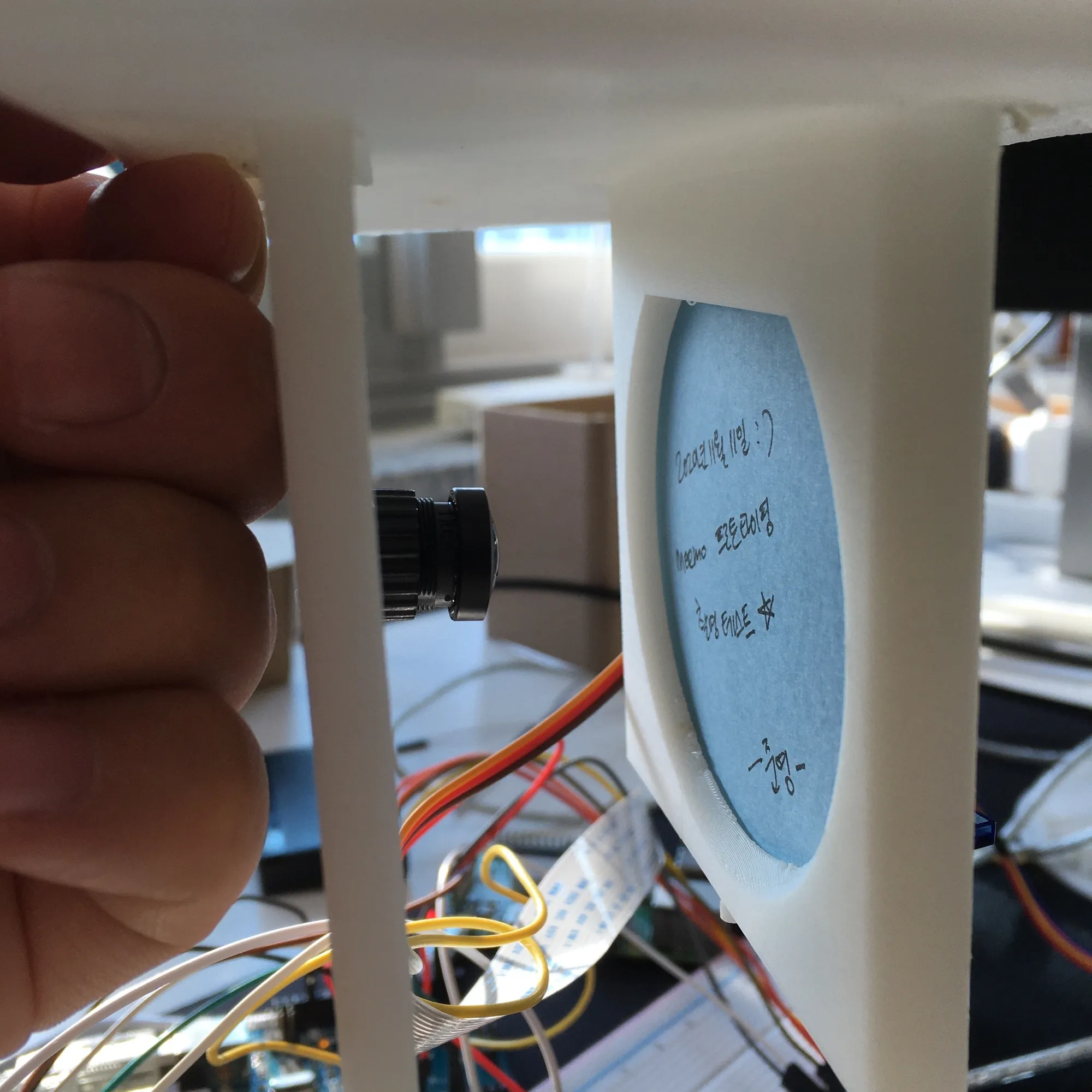
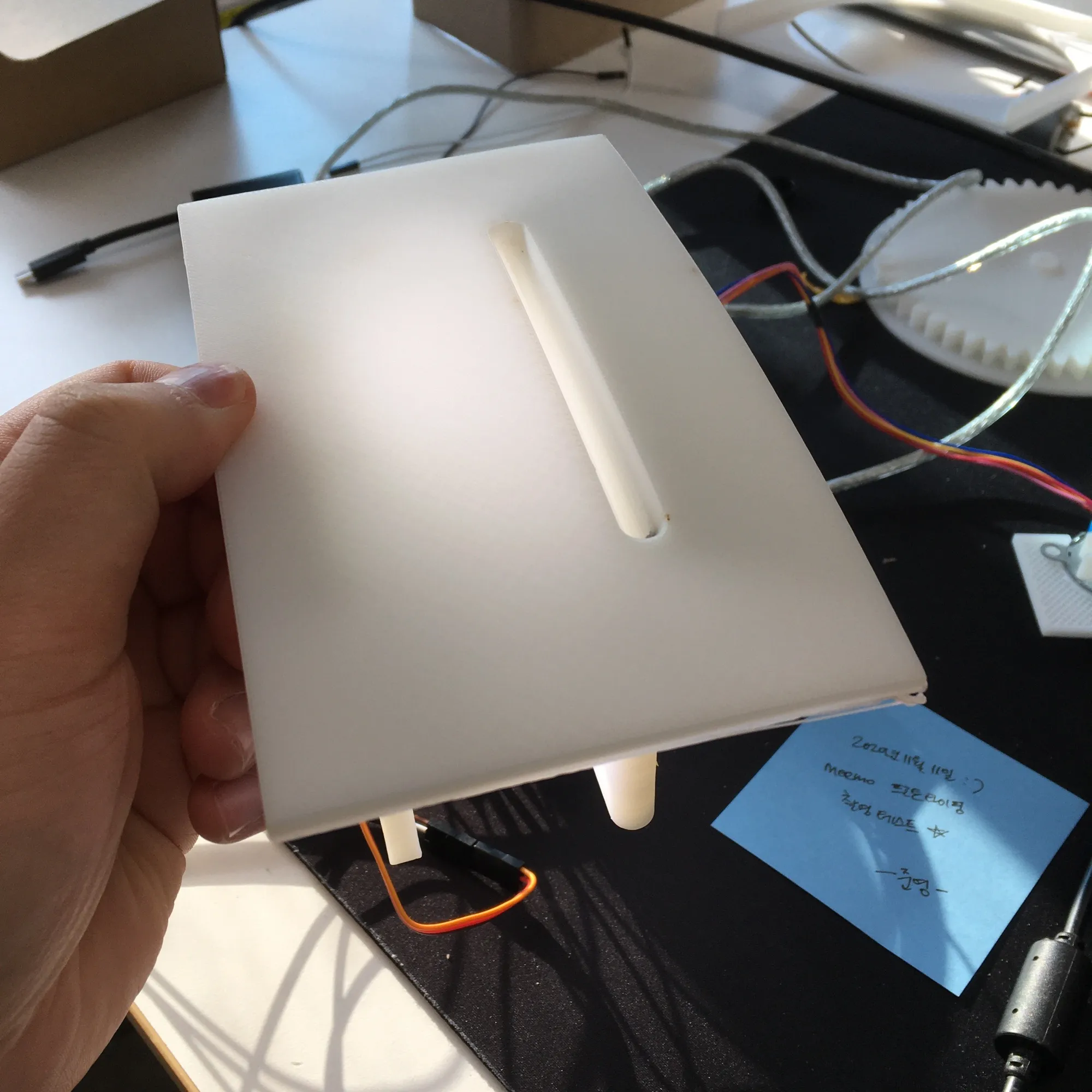
I modeled the exterior and the internal structure in Fusion 360. The shell was CNC-machined, and the internal parts that hold the camera, sensor, and gears were 3D-printed. The stepper motor drives the disc through two spur gears.
Paper took the most time. Paper that was too thin would not feed, and square corners caught inside the device. After trying different thicknesses, materials, and shapes, I settled on the round memo, and recessed the slot so paper slides in easily.
The camera didn’t work the first time either. I started by trying to find the four corners of the sheet, the way document-scanning examples do, but the wide-angle lens I needed for the cramped interior distorted the image too much to find them. The repository still has separate test code for the camera, cropping, the Dropbox upload, and serial communication. Along the way I burned a PCB and redid work after design mistakes.
IMPACT
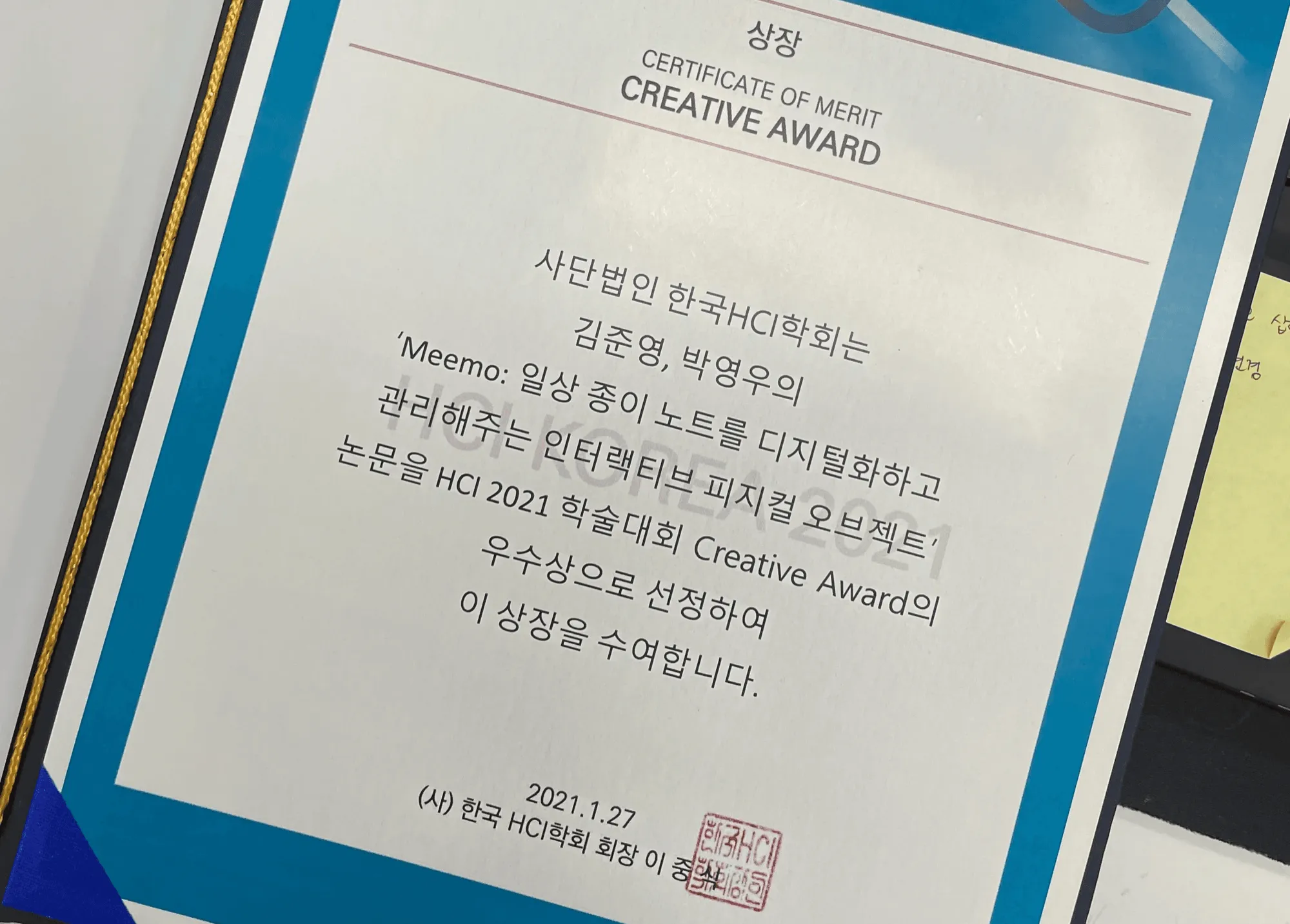
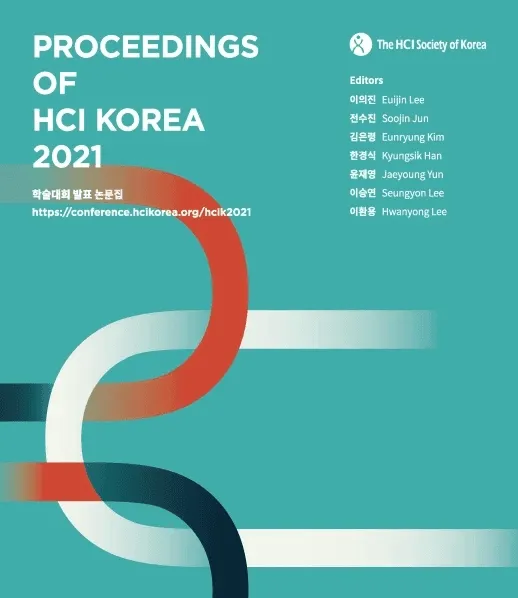
Meemo received the Excellence Award at the HCI Korea Creative Award.
It was presented at the HCI Korea 2021 conference and published in the proceedings. The paper covers physical computing techniques such as infrared sensors and motor systems, along with the design of a user-centered note management interface.
REFLECTION
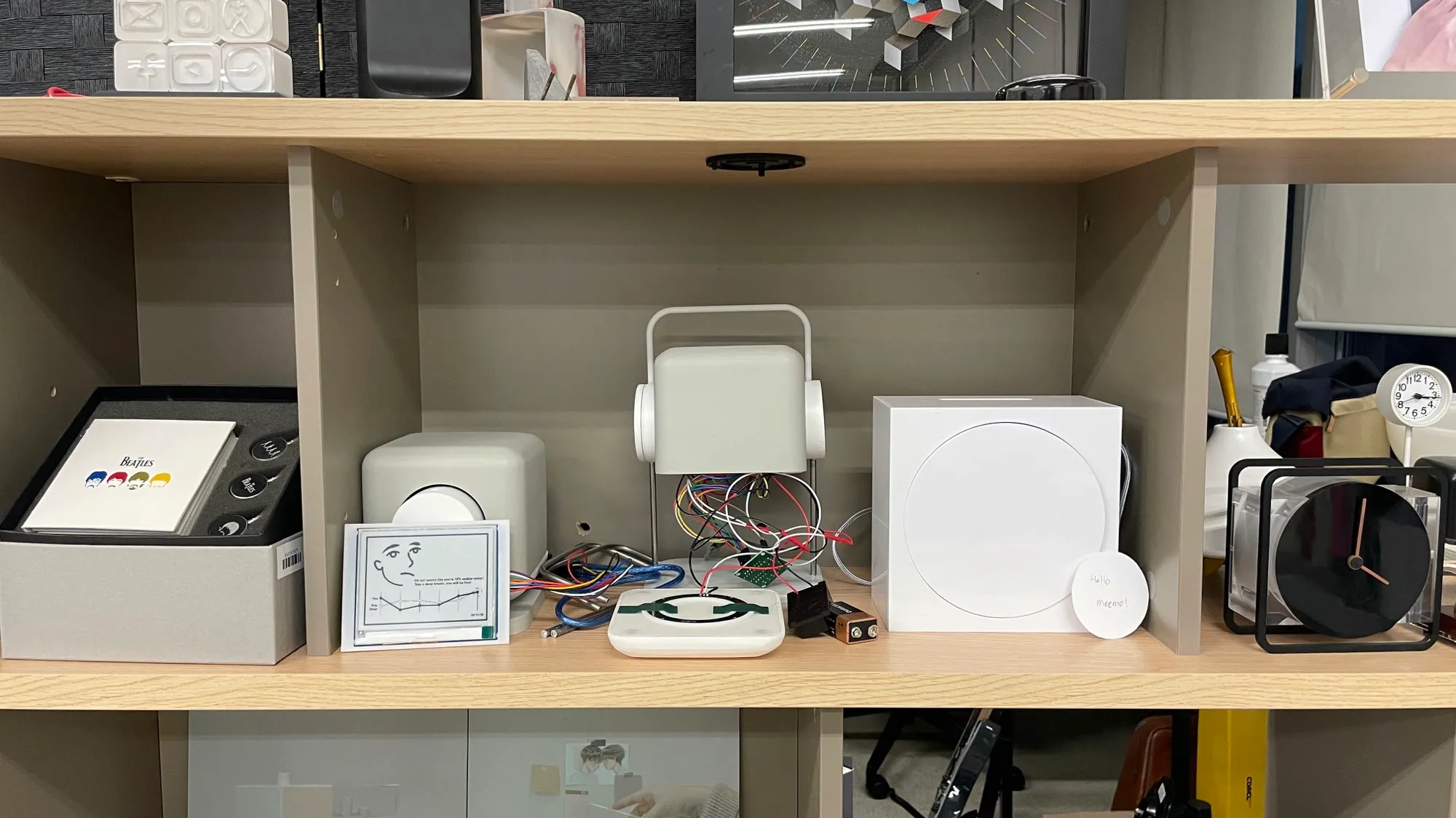
Meemo was the first time I took an idea of my own all the way to a product. Wiring Arduino and Raspberry Pi together, designing the internal structure, 3D printing, and CNC machining were all new to me, and when I got stuck I asked specialists and fixed things one at a time.
Ideas that looked easy in my head threw up one unexpected problem after another once I built them. It was a lot like untangling a knot of string.